
Last updated October 16, 2026
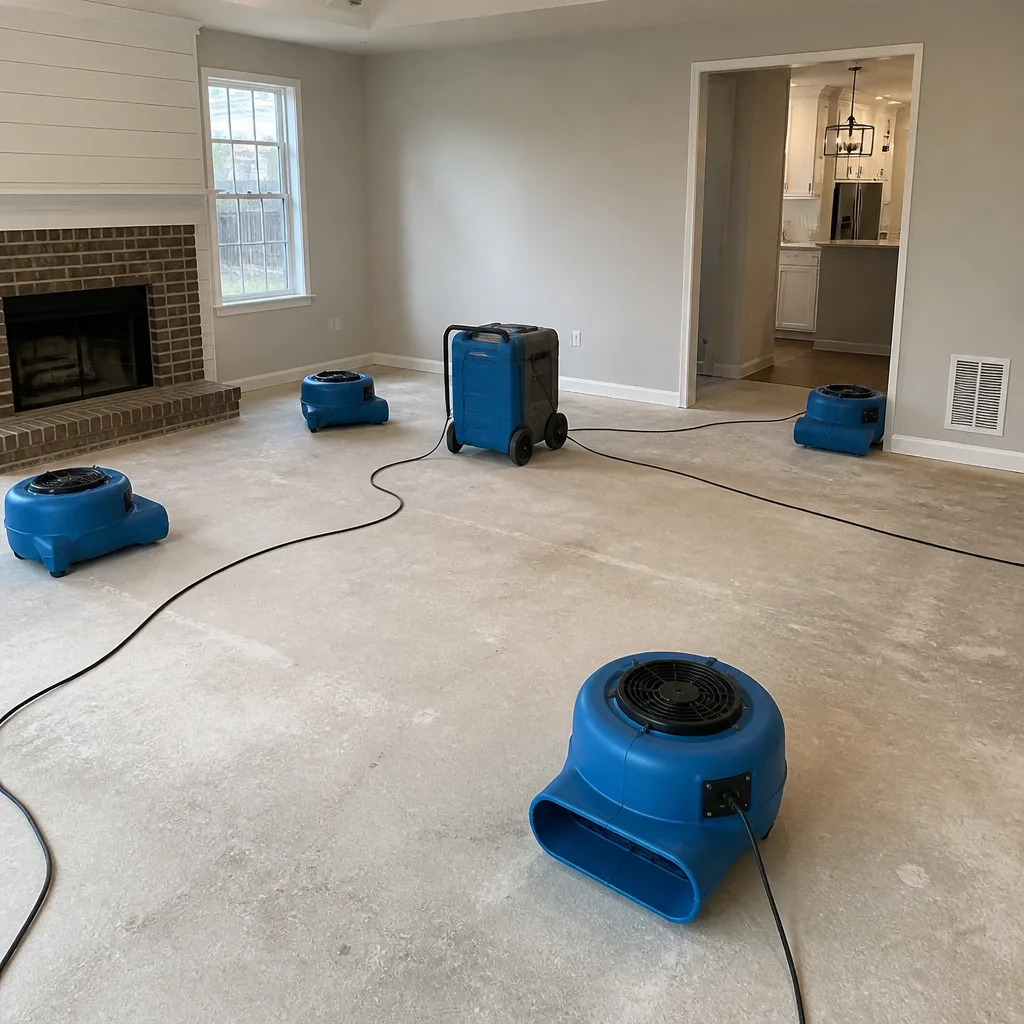 Water damage drying
 Fire & smoke cleanup
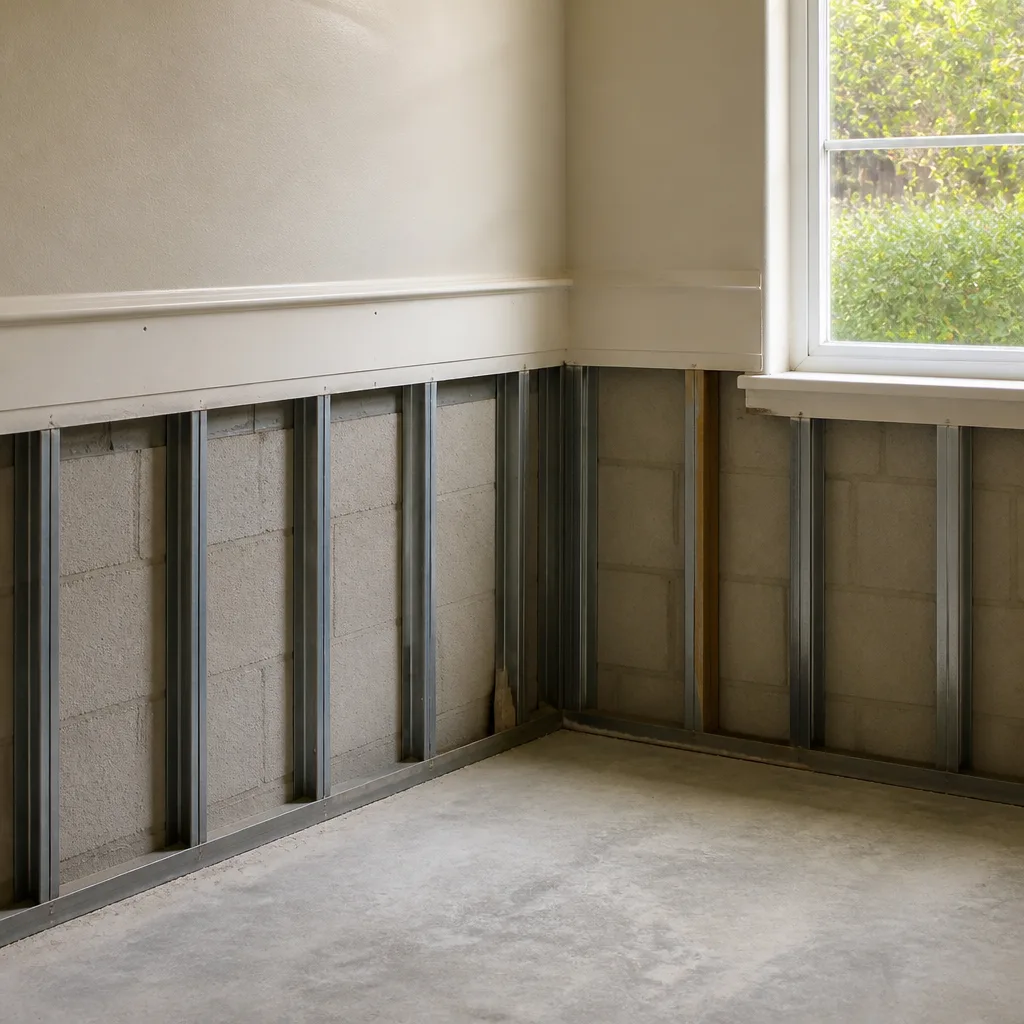 Mold remediation
 Storm response
 Sewage cleanup
 Reconstruction
Free visual inspection and a written scope of work before any mitigation begins - photos, moisture readings, and drying logs go in your claim file
The scope we write is the scope we bill. Anything new gets shown to you, in writing, before we touch it.
Get your free estimateSeasonal Damage Restoration Care for Orange County: Year-Round Homeowner’s Guide
Every January in Orange County, restoration companies run the same jobs: gutters clogged with fall debris that redirected the first real rain of the season straight into attic eaves. It’s not a coincidence. It’s a skipped October task playing out on a two-month delay. This guide walks through exactly what Orange County’s actual weather does to homes quarter by quarter, when the real risk spikes are, and which specific tasks prevent the damage calls we field year after year in neighborhoods from Huntington Beach to Rancho Santa Margarita. For a broader overview, see our Complete Guide to Damage Restoration in Orange County.
Restoration work we handle
Quick Answer
Orange County’s mild climate makes seasonal home prep feel optional, but the region’s specific weather sequence (marine layer, Santa Ana winds, sudden rain) creates predictable damage cycles. The highest-risk season is fall, specifically the six weeks before the first Santa Ana wind event. Our Water Damage Restoration Maintenance Checklist for Orange County Homeowners covers gutters, drainage, soil moisture, and attic ventilation to prevent the majority of water and mold damage, and it documents the kind of consistent maintenance that insurance adjusters view favorably when a claim does happen.
Table of Contents
- The OC Damage Calendar: Why Mild Weather Still Breaks Homes
- Winter (December – February): The Rain Season That Exposes October’s Skipped Tasks
- Spring (March – May): The Mold Window Nobody Watches
- Summer (June – August): Soil Shrinkage, AC Condensate, and UV Stress
- Fall (September – November): The Highest-Risk Season and the Four Tasks That Must Happen First
- Documented Habit: Seasonal Prep as an Insurance Asset, Not Just a Chore
- Common Mistakes to Avoid
- When to Call a Professional
- Frequently Asked Questions
- The Bottom Line
The OC Damage Calendar: Why Mild Weather Still Breaks Homes
Orange County doesn’t get the dramatic weather that makes homeowners in Minnesota or Louisiana treat seasonal prep as non-negotiable. No freeze-thaw cycles splitting pipes. No hurricane season. But that’s exactly the problem. The absence of extreme weather creates a false sense that nothing urgent is happening to the structure. Meanwhile, the county’s actual climate pattern, a dry Mediterranean system with a persistent marine layer, short intense rain bursts, and seasonal Santa Ana wind events, produces a different kind of damage. It’s slower, less visible, and almost always traced back to a maintenance task that was skipped months earlier.
Here’s the sequence we’ve documented in Orange County homes since 2005:
- Fall: Santa Ana winds strip trees and pack gutters, downspouts, and roof valleys with dry debris. Wind-driven dust and leaf litter accumulate on flat roofs and in scuppers.
- Early winter: The first real rain arrives, often as a short, intense downpour. Clogged gutters overflow against fascia boards. Flat roofs pond water where debris dams formed. Water finds the path of least resistance, which is often a soffit vent, a stucco crack, or a parapet cap joint.
- Late winter through spring: Temperatures stay mild enough for mold to colonize any material that got wet and wasn’t dried properly. The marine layer keeps relative humidity (RH, the amount of moisture air holds at a given temperature) elevated, which slows natural drying.
- Summer: The ground dries out. Expansive clay soils in inland Orange County cities like Yorba Linda, Orange, and Lake Forest shrink, pulling away from foundation edges. Irrigation runoff follows the gap. Meanwhile, AC condensate lines clog with the dust Santa Ana winds left behind.
None of these are dramatic events. Each one is a slow accumulation of conditions that a specific seasonal task would have interrupted. The good news: the tasks are simple, cheap, and repeatable. The better news: documenting them creates a paper trail that helps if you ever need to file a claim. We’ll get to that.
For a deeper look at how water damage specifically progresses in Orange County homes, see our Water Damage Restoration in Orange County guide.
Winter (December – February): The Rain Season That Exposes October’s Skipped Tasks
By the time winter rain arrives in Orange County, the damage that will show up in January calls was set in motion during fall. What winter actually tests is drainage capacity: can your gutters, downspouts, scuppers, and grade move water away from the structure fast enough during a short, high-intensity rain event? Orange County rain rarely falls as a gentle all-day soak. It comes as bursts, often an inch or more in a few hours, and those bursts overwhelm any drainage component that’s running at partial capacity.
What We See on Winter Calls
- Gutter overflow at inside corners: The elbow where two rooflines meet is the most common failure point. Debris piles there first because water slows at the corner, dropping suspended material. Overflow at an inside corner drains directly into the attic eave or down the exterior wall cavity.
- Ponding on flat roofs: Many Orange County homes in mid-century tracts in Anaheim, Garden Grove, and Fullerton have flat or low-slope roof sections. Debris dams at scuppers or roof drains create ponds. A properly sloped roof drains within 48 hours of rain stopping; standing water after that signals a drainage failure, not a roof failure.
- Window and door flashing leaks during wind-driven rain: Santa Ana winds are typically dry, but winter storms can carry gusts. Rain driven at 30 to 40 mph enters flashing gaps that moderate-angle rain would never reach.
- Planter and grade issues: Rain saturates soil against the foundation. If the grade slopes toward the house, hydrostatic pressure builds against the foundation wall, and water finds entry through stem wall cracks, cold joints, or utility penetrations.
Winter Response Checklist
- After the first real rain, walk the perimeter while it’s still raining. Look at every gutter seam, inside corner, downspout connection, and scupper. You’re looking for overflow, splash-out, or water running down wall surfaces.
- Check the attic within 48 hours of a heavy rain. Look for damp sheathing, water staining on insulation, or drip marks on the top plates of interior walls. Attic moisture is easiest to catch early, before it becomes visible on ceilings.
- Check the crawlspace if you have one. Look for standing water, damp soil, or increased humidity. A crawlspace that reads above 60% RH for more than a few days will grow mold on floor joists, which you’ll smell long before you see it.
- Test your sump pump or French drain. If you have either, run it. A failed sump pump is a winter classic. Pour five gallons into the sump pit and confirm the float switch triggers the pump to cycle.
If water has already entered, time matters. The first 24 to 48 hours determine whether you’re dealing with a dry-out or a mold remediation. Our Mold Remediation in Orange County page explains what happens when wet materials sit too long.
Spring (March – May): The Mold Window Nobody Watches
Spring in Orange County is deceptively pleasant. Rain fades. The marine layer returns in May and June as “May Gray” and “June Gloom.” Temperatures hover in the 60s and 70s. And that temperature range, combined with elevated RH from the marine layer, is the sweet spot for mold growth on any material that got wet during winter and wasn’t dried completely.
Here’s the sequence that causes spring mold problems: water enters a wall cavity or under flooring during a winter rain event. The homeowner dries the visible surface, maybe with a fan or a wet vacuum. The interior of the cavity remains damp because there’s no airflow. As ambient temperatures rise in March and April, the moisture in the cavity keeps the material warm and damp. Mold spores, always present in Orange County air, colonize the material. By the time a musty odor is noticeable, usually in late spring, the colony is established.
Spring Reset Checklist: Preventing Post-Rain Mold
- Audit every area that got wet during winter. Make a list during the winter of every leak, stain, or damp spot you noticed. In spring, revisit each one. Look for discoloration, warping, peeling paint, or a musty smell.
- Run a moisture meter over suspect areas. A basic pin-type moisture meter costs less than $50 at any hardware store. On drywall, a reading above 15% moisture content signals elevated moisture that needs addressing. On wood framing, anything above 16% is a concern. This is the same tool professional restoration technicians use for their initial assessment.
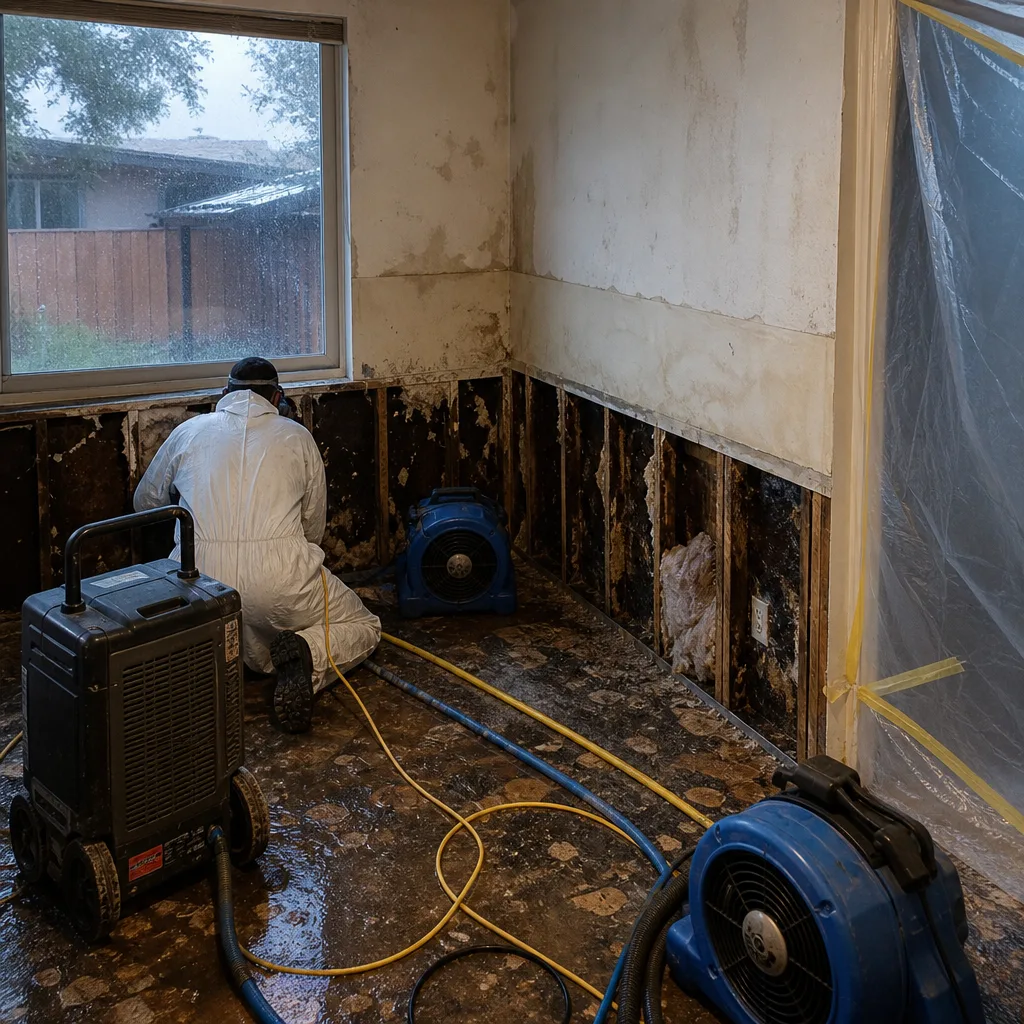
- Open up anything that stayed wet. If a wall cavity or floor area shows elevated moisture in spring, it will not dry on its own. The cavity needs airflow, which means opening a section, removing saturated insulation, and running professional drying equipment. The professional-grade machines (Dri-Eaz, Phoenix, XPOWER) move air at volumes that household fans can’t match, and the difference is the difference between a two-day dry-out and a two-month mold problem.
- Check for condensation on cold surfaces. The marine layer creates cool, damp air. When that air contacts cold concrete slab floors or uninsulated pipes in unconditioned spaces, it condenses. Look for water beading on concrete, especially in garages and basements.
- Inspect window tracks and sliding door frames. Winter rain often leaves standing water in window tracks that never fully evaporates. That moisture wicks into the surrounding frame and creates slow, persistent rot or mold at the sill.
We use a principle called psychrometric drying, which simply means we measure temperature, humidity, and moisture content throughout the drying process and adjust equipment until the building material reaches a target dryness level. It’s not guesswork, and it prevents the exact scenario where a contractor seals up a wall that’s still damp inside, which is how most “mold came back after remediation” stories start.
Summer (June – August): Soil Shrinkage, AC Condensate, and UV Stress
Summer is the season Orange County homeowners think of as safe. No rain. Low humidity once the marine layer burns off. Clear skies. But summer has its own damage profile, and it’s one that flies under the radar because it’s slow and invisible.
Soil Shrinkage and Foundation Movement
Much of inland Orange County sits on expansive clay soil. Expansive soil swells when wet and shrinks when dry. During summer, when rain stops and irrigation is the only moisture source, the soil around foundations dries out and shrinks. The soil pulls away from the foundation edge, creating a visible gap. That gap becomes a channel: irrigation runoff, hose overspray, or even a spilled pool water blast follows the gap down to the footing. When the soil eventually rehydrates during the next rain or irrigation season, it swells, and that swelling creates lateral pressure against the foundation wall. The cycle of shrink and swell, repeated year over year, is a primary driver of foundation cracks in Orange County’s inland cities.
What to do: During dry months, maintain consistent soil moisture around the foundation perimeter. Don’t overwater (that creates its own pressure problem), but don’t let the soil pull away from the slab edge. A consistent drip line 18 to 24 inches from the foundation edge, run on a timer during early morning hours, keeps soil moisture stable through the dry season.
AC Condensate Line Clogs
Air conditioning systems in Orange County run hard from June through October. As they cool, they remove moisture from the air. That condensate drips into a drain line that typically runs outside or into a plumbing fixture. Over time, the line accumulates dust, biological growth, and mineral scale. The dust component matters more in Orange County than in humid climates: fall’s Santa Ana winds deposit fine dust on the AC’s evaporator coil, and that dust gets washed into the condensate line during summer operation. The result is a clogged line, and the water backs up: into the overflow pan, onto the ceiling below an attic unit, or onto the floor of an interior closet unit.
What to do: At the start of summer, and again mid-season, check the condensate line. If you see water staining around the indoor unit, a wet overflow pan, or a drip from the secondary drain line outside, the primary line is likely partially clogged. A pro can clear it with a CO2 charge. You can also pour a cup of white vinegar down the line at the start of each cooling season to slow growth, but that’s prevention, not repair.
Flat-Roof Membrane Stress from UV Exposure
Orange County gets an average of 278 sunny days per year. That’s a lot of sustained UV radiation on roofing materials. Flat and low-slope roofs, common on mid-century modern homes in Orange, Anaheim Hills, and Tustin, are particularly vulnerable. The membrane (typically modified bitumen, built-up roofing, or single-ply like TPO) degrades under UV exposure, becoming brittle and developing small cracks and splits. Those cracks are entry points for the first winter rain, and because they develop over months without any visible sign (no leak until it rains), they’re the classic deferred damage that winter exposes.
What to do: Once a year, ideally in late summer or early fall, inspect the roof surface. Look for cracking, blistering, separation at seams, or areas where the membrane has pulled away from penetrations like vents, skylights, or parapet walls. If you see membrane degradation, address it before the rain season, not after.
Fall (September – November): The Highest-Risk Season and the Four Tasks That Must Happen First
Fall is when Orange County’s damage cycle begins. The combination of Santa Ana winds arriving on schedule and the first winter rain arriving unpredictably creates a narrow window where conditions are set, and then a trigger event that exposes everything unresolved. Here’s why fall matters more than any other season: the tasks are cheap, quick, and unglamorous, but skipping them almost guarantees a specific, predictable failure. The four tasks below need to happen before the first Santa Ana wind event of the year, which in Orange County typically arrives between mid-September and late October.
Task 1: Clear Gutters, Downspouts, and Roof Valleys
Santa Ana winds strip eucalyptus, pine, pepper tree, and liquidambar leaves and deposit them directly into gutters. Eucalyptus leaves are especially problematic: they’re oily, they mat together, and they don’t break down quickly. Once gutters are packed, the first rain has nowhere to go. Overflow runs down fascia boards, into soffit vents, and behind the gutter itself. The fix: hire a gutter cleaning service or do it yourself with a ladder stabilized on level ground. After cleaning, run a hose through each downspout to confirm flow. Check downspout discharge points: water should exit at least three feet from the foundation and flow away from the structure.
Task 2: Trim Branches Back from the Roof
Santa Ana winds don’t just drop leaves. They send tree limbs into contact with roofing materials, dragging across shingles, tiles, and membrane surfaces. A limb that rubs against a flat roof membrane during a wind event will eventually cut through it. Limb contact also drops more debris onto the roof than the gutter can handle. The fix: trim all branches back to at least six feet from the roof edge and roof surface before wind season. This is especially important for eucalyptus and pepper trees, which have brittle limbs that snap in high wind.
Task 3: Inspect All Exterior Penetrations
Roof penetrations are the most common leak points in any structure: plumbing vents, HVAC penetrations, exhaust fans, skylights, chimneys, and the fasteners holding them in place. Each one is sealed with some combination of flashing, sealant, or boot. Those seals degrade in Orange County’s UV climate. The fix: visually inspect each penetration from the roof or with binoculars from the ground. Look for cracked or separated sealant, rusted flashing, or gaps where the penetration meets the roof surface. Re-seal with a UV-stable sealant rated for roofing. This is a DIY-friendly task if you’re comfortable on a ladder or roof; if you’re not, hire a handyman or roofer. The cost of a sealant touch-up is $50 to $200. The cost of the leak it prevents can run into thousands.
Task 4: Test the Irrigation and Check the Grade
This seems counterintuitive before rain season, but here’s the logic: the months before rain arrives are when the ground around your foundation is driest. Any grade issues, depressions, or areas where the soil has settled to slope toward the house are most visible now. Fix them before rain arrives. The same applies to irrigation: if a sprinkler head is cracked or misdirected, you want to know before it adds water to the foundation during the rainy season, not after. The fix: walk the perimeter. Look for any area where the soil slopes toward the house. Fill and compact low spots. Check sprinkler heads for proper direction, especially any near the foundation. Adjust or replace heads that spray the house.
Documented Habit: Seasonal Prep as an Insurance Asset, Not Just a Chore
We’ve handled insurance claims alongside Orange County homeowners long enough to know how adjusters think. The single most useful thing a homeowner can do, beyond the actual prevention work, is document that the prevention work happened. When an insurance claim is filed, the adjuster asks a sequence of questions. Was the damage sudden and accidental? Was there evidence of ongoing neglect? Had the homeowner taken reasonable steps to maintain the property?
A documented seasonal routine answers the third question before it’s asked. Here’s what actually matters to adjusters:
- Photographs with timestamps. A phone photo of clean gutters taken in October, timestamped, is evidence of maintenance. Photos of the same gutters overflowing in January, after the damage, tell a different story.
- Receipts and invoices. A gutter cleaning invoice from October, a roof inspection report from September, a receipt for the moisture meter you bought in spring. Each is a data point in your favor.
- A running maintenance log. A simple spreadsheet or notebook entry noting the date, the task, and anything unusual found. Adjusters don’t expect a formal log, but when it exists, it consistently shifts the claim conversation in the homeowner’s favor.
- Professional assessments when something looks wrong. If you see something you can’t explain, documentation from a professional assessment is your strongest tool. It shows you noticed a problem and took reasonable action, which is the opposite of neglect.
Conversely, the absence of documentation is something insurers can use. “When did you last have the gutters cleaned?” is not a conversation you want to lose. The seasonal tasks themselves are simple and cheap. The documentation habit is the multiplier.
If you’re in the middle of a fire-related damage situation, our Fire Damage Restoration in Orange County page covers the specific documentation and process for fire claims.
Common Mistakes to Avoid
- Skipping fall gutter cleaning because “it doesn’t rain until January.” Orange County’s first rain can arrive in November or early December. If gutters are clogged when that first rain hits, the damage happens immediately. The fall gutter task is non-negotiable.
- Assuming a visible water stain has fully dried. A surface stain can look dry while the wall cavity behind it is still damp. Use a moisture meter. If the reading is elevated, the area needs professional drying, not just paint.
- Caulking over a leak without addressing the water entry point. Sealant on an interior crack doesn’t stop water from entering the wall system. It just traps the water inside, which accelerates mold growth and rot. The entry point is on the exterior, and that’s where the fix belongs.
- Ignoring a musty smell because you can’t find visible mold. If you can smell it, there’s a colony active somewhere. The absence of visible mold means it’s hidden, not gone. A professional inspection with moisture mapping tools finds it.
- Running a household fan on water damage for weeks instead of professional drying equipment. Household fans don’t move enough air to dry building cavities. The result is a surface that looks dry and a cavity that stays damp long enough for mold to establish. Professional equipment like Injectidry systems or Dri-Eaz air movers creates the airflow and controlled RH needed for actual structural drying.
- Treating seasonal prep as random tasks instead of a dated checklist. Undocumented maintenance is hard to prove later. A simple log with dates and photos makes every task count for insurance purposes.
- Ignoring the crawlspace because “nobody goes down there.” Crawlspace moisture problems compound quietly. A musty smell upstairs is often a crawlspace issue below. Check it every season.
When to Call a Professional
Some situations are clear DIY territory: clearing gutters, trimming branches, checking sprinkler direction. Others are not. Call a professional when you see active water intrusion you can’t trace to its source, when a moisture meter reads above 15% on drywall or above 16% on wood framing days after the initial event, when you smell mold but can’t find the colony, when a flat roof shows visible membrane cracking or ponding that persists beyond 48 hours, or when you’ve already tried a fix and the problem returned. These are the cases where the damage is beyond surface level and the drying science matters. Dryden Restoration Orange County offers free estimates in Orange County, call (424) 552-4739. A technician can assess the situation, map the moisture with professional meters, and give you a written price before any work starts, so you know exactly what you’re dealing with and what it costs.
Frequently Asked Questions
Cleaning gutters and downspouts before the first Santa Ana wind event of fall, then confirming flow before the first rain. In our experience, it prevents more Orange County water damage than any other single task, because it’s the task most commonly skipped and the one whose failure sends water directly into the attic eave or wall cavity.
Santa Ana winds don’t cause water damage directly. They create the conditions for later water damage by stripping trees and depositing dry leaf litter into gutters, roof valleys, and scuppers. When the first winter rain arrives weeks later, that debris blocks drainage and redirects rainwater into the structure. The wind event is the setup; the rain event is the trigger.
Orange County averages 12 to 14 inches of rain per year, concentrated into a handful of storm events. A single storm can deliver two to four inches in a day. The concentration matters more than the total: drainage systems sized for light rain get overwhelmed by a short, intense burst, and any partial clog becomes a full failure. The prep is about managing peak events, not annual averages.
Professional air movers like Dri-Eaz and Phoenix units move 2,000 to 3,000 cubic feet per minute of air across surfaces, while typical household box fans move 500 to 1,000 CFM. Professional dehumidifiers like XPOWER units remove 50 to 100 pints of water per day from the air, while a household dehumidifier removes 20 to 30. The difference in speed determines whether materials dry before mold colonizes, which typically takes 48 to 72 hours in Orange County’s climate.
It depends on your policy and the specific circumstances, but the general pattern is this: sudden and accidental events (a pipe burst, a wind-driven rain breach) are typically covered, while gradual damage from neglect (a long-term leak from a gutter that was never cleaned) is often reduced or denied. Documented seasonal maintenance strengthens your position, because it demonstrates that you took reasonable ongoing care of the property. When claims get complicated, we can help with photo documentation and direct adjuster coordination.
The marine layer elevates outdoor relative humidity, especially in coastal cities like Newport Beach, Huntington Beach, and San Clemente. When outdoor RH is high, natural evaporation slows, and damp materials stay damp longer. Professional drying must account for this by sealing the affected area and controlling RH with dehumidifiers, rather than relying on open-window ventilation, which can actually add moisture to the space during marine layer periods.
The Bottom Line
Orange County’s seasonal damage cycle is predictable because it follows the same sequence every year: fall Santa Ana winds load the drainage system with debris, winter rain exposes every unresolved blockage, spring temperatures create the mold window, and summer’s dry heat causes soil and UV stress. Each season has a specific, inexpensive set of tasks that interrupts the next failure. The tasks are not hard. The discipline is. Homeowners who build the seasonal habit and document it with photos, receipts, and a simple log don’t just prevent damage. They build an insurance asset that pays off when the unexpected happens despite their best work. For more guides & resources on protecting your home, explore our blog, or call (424) 552-4739 for a free estimate.
Written by Carl Brandt, Owner at Dryden Restoration Orange County, serving Orange County since 2005.
See the difference
 Before
 After
After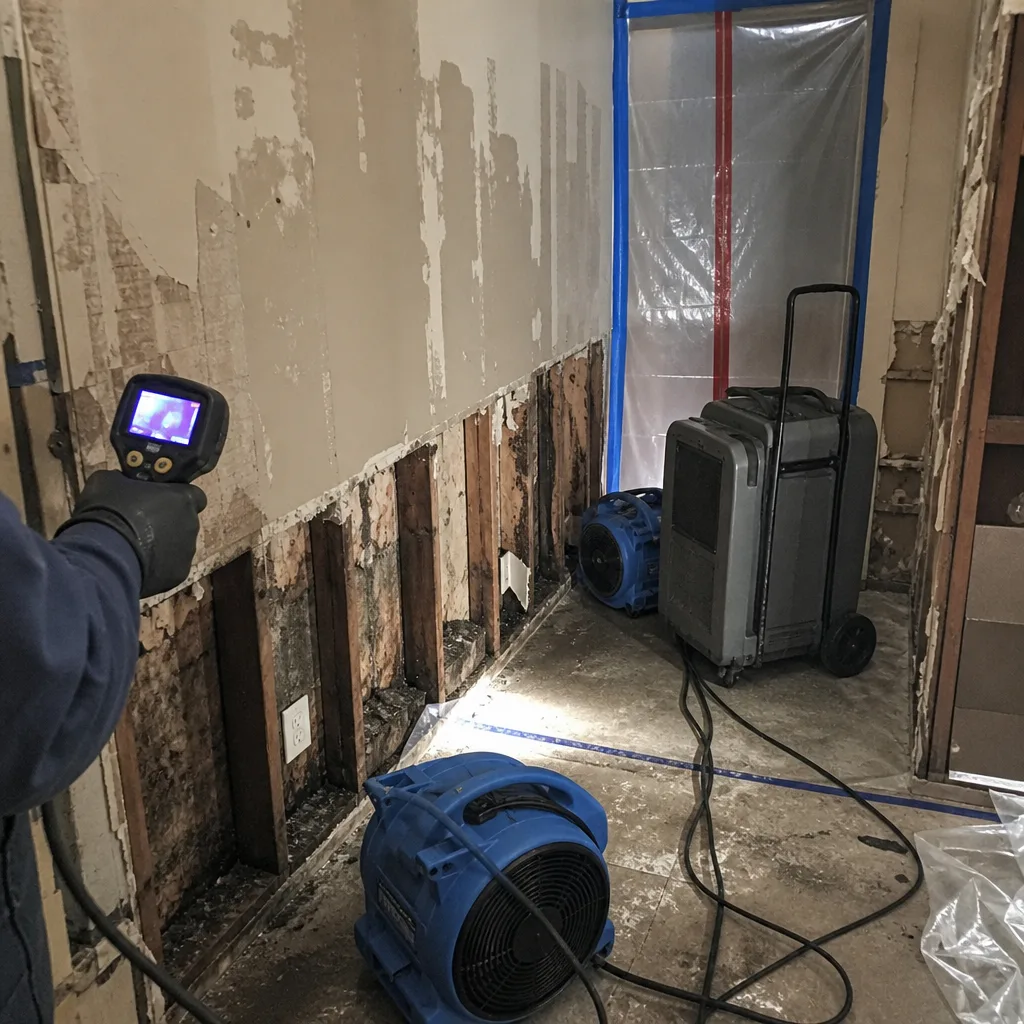 Before
 After
After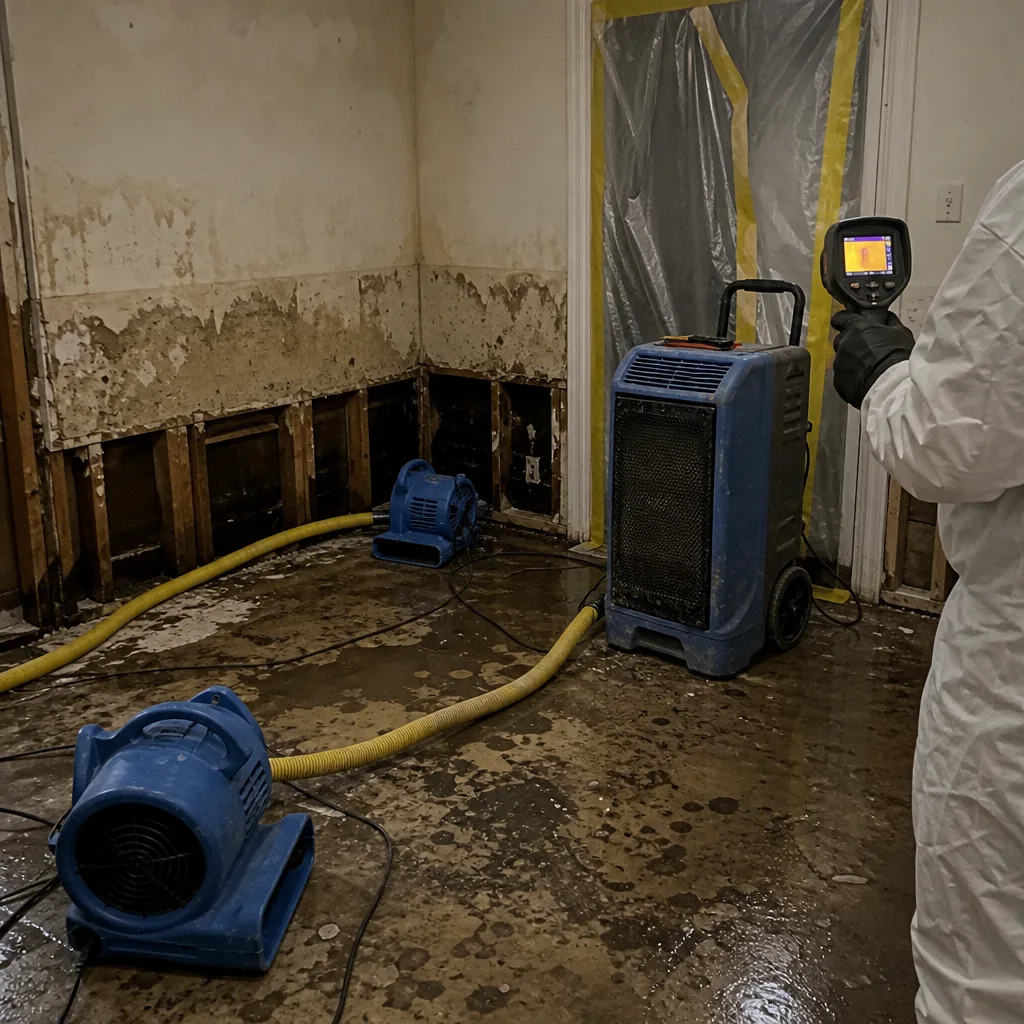 Before
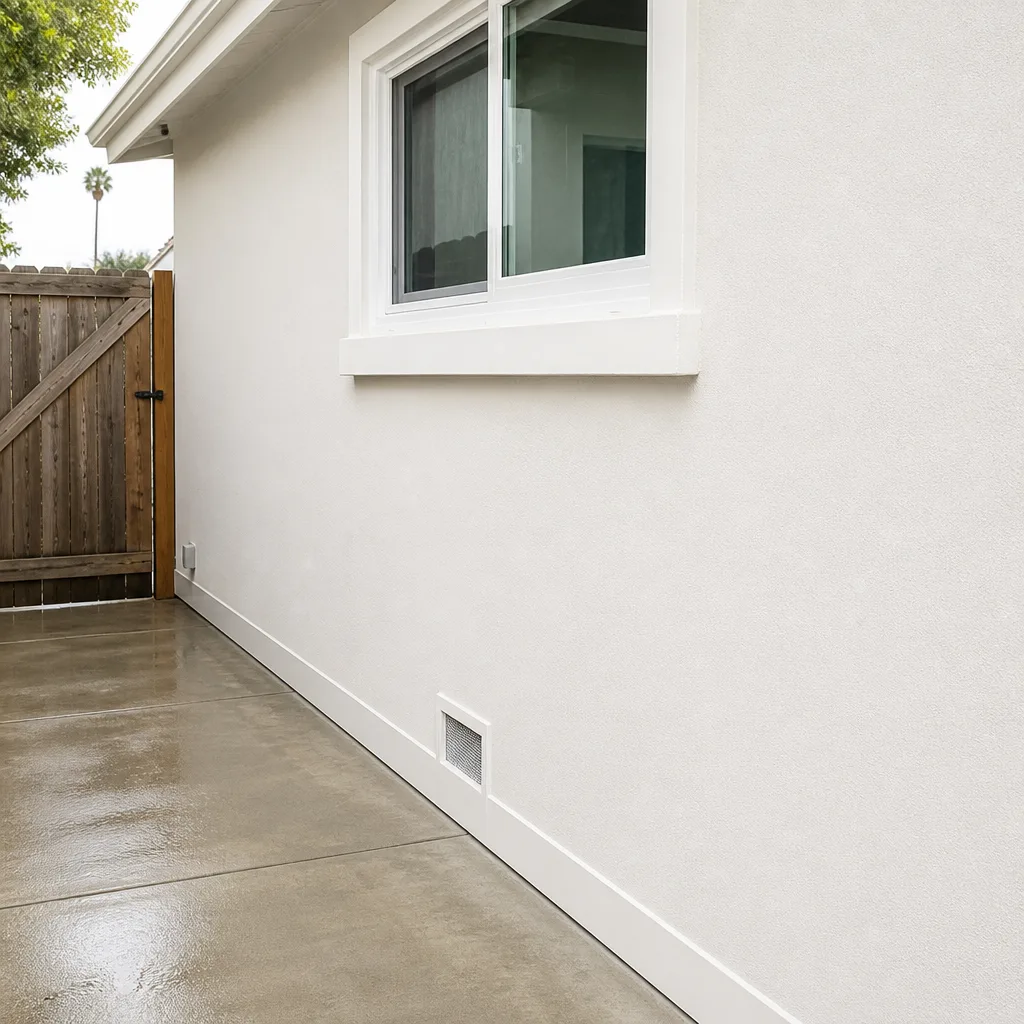 After
After