
Last updated October 16, 2026
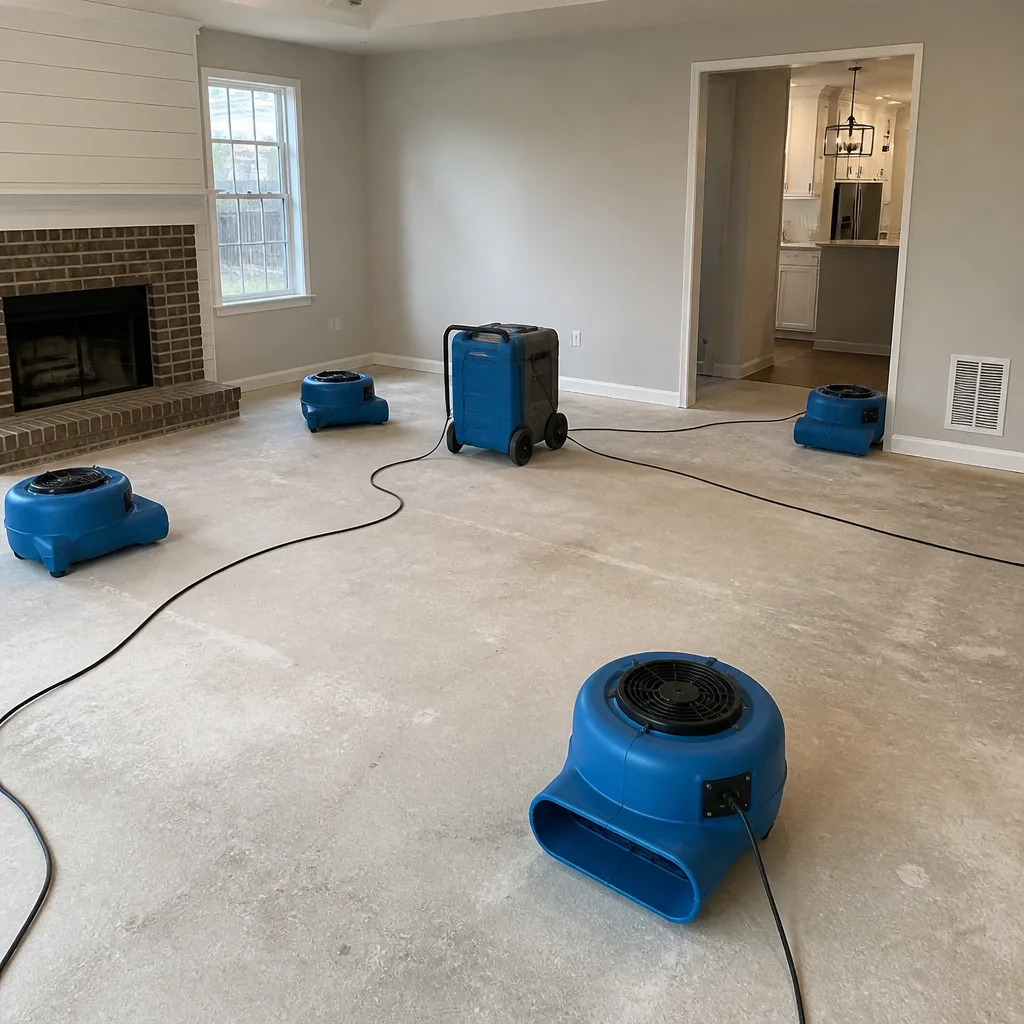 Water damage drying
 Fire & smoke cleanup
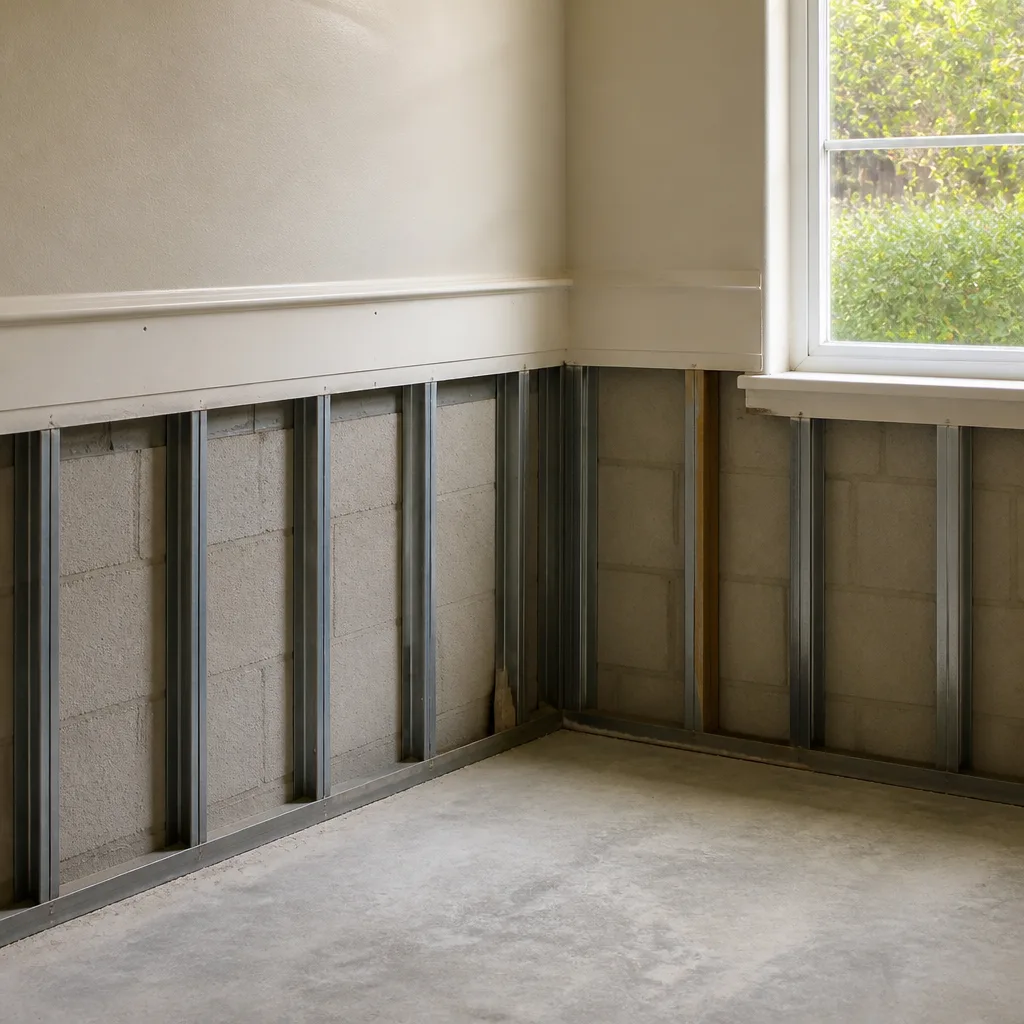 Mold remediation
 Storm response
 Sewage cleanup
 Reconstruction
Free visual inspection and a written scope of work before any mitigation begins - photos, moisture readings, and drying logs go in your claim file
The scope we write is the scope we bill. Anything new gets shown to you, in writing, before we touch it.
Get your free estimateDIY vs Professional Damage Restoration: The Orange County Homeowner’s Decision Guide
California law does not require homeowners to hire a licensed contractor for work on their own primary residence. That sounds like permission. But your insurance policy almost certainly contains language about “proper drying standards” and “reasonable mitigation” that, if you didn’t meet them with rented fans and a shop vac, gives an adjuster grounds to reduce what they pay on a future related claim. This guide walks you through where DIY is genuinely reasonable in Orange County, where it isn’t, and how to decide without learning the hard way. For more guidance, see our step-by-step guide to hiring a damage restoration contractor in Orange County.
Quick Answer
DIY restoration is only sensible for small, surface-level water contact on non-porous materials that you can fully dry within 24-48 hours. Anything involving Category 2 or 3 water (gray or black water), water that has touched drywall or subfloor, any mold growth larger than about 10 square feet, or fire damage with smoke residue requires professional equipment, documentation, and standards compliance to protect both your health and your insurance claim. In Orange County, where homes built before 1980 often contain asbestos and lead paint, the risk of DIY disturbance is higher than most homeowners realize.
Restoration work we handle
Table of Contents
- What DIY Restoration Actually Costs in Orange County
- Where DIY Is Genuinely Reasonable (and Where It Is Not)
- What IICRC S500 Drying Standards Actually Say in Plain English
- The Insurance Implications of DIY Restoration
- The Asbestos and Lead Paint Reality for Pre-1980 Orange County Homes
- A Realistic Cost Comparison: Rented Equipment vs. Professional Service
- How to Negotiate Which Parts of a Job You Do Yourself
What DIY Restoration Actually Costs in Orange County
Renting a dehumidifier and a few air movers from a big-box store in Anaheim or Santa Ana will run you roughly $40-$80 per day. You’ll also need a moisture meter, which costs about $30-$50 per day to rent or $25-$60 to buy a basic one. If you’re dealing with wet drywall, you’ll need to cut it out, bag it, and dispose of it. Orange County landfill fees for construction debris run about $50-$70 per load at facilities like Olinda Alpha or Prima Deshecha.
Here’s what most people don’t account for: time. Proper drying of a mid-size water loss takes 3-5 days of monitoring. You’ll need to check moisture readings every 12 hours, reposition fans, empty dehumidifier buckets, and document everything. If you take time off work, your hourly rate gets added to the project cost. If you’re doing this on evenings and weekends, the drying window stretches out, and secondary damage like mold becomes more likely.
Professionals charge $2,500-$6,500 for a typical Category 1 clean-water loss affecting one room with drywall and flooring. That includes equipment, labor, monitoring, and documentation. Your DIY project might cost $400-$800 in rentals and materials. But if it fails – if mold appears six weeks later or your insurance company disputes the claim because you didn’t meet industry standards – the remediation bill can reach $8,000-$15,000. In our experience serving Orange County homeowners since 2005, the break-even point is smaller than people think. More on that in the cost comparison section below.
Where DIY Is Genuinely Reasonable (and Where It Is Not)
There are real situations where doing it yourself makes sense. The key is knowing the line.
Reasonable DIY Scenarios
- Category 1 water on sealed concrete: A supply line leak in a garage with an epoxy-coated floor. If the water came from a clean source and the surface is non-porous, shop-vac it, run a fan for 24 hours, and verify dryness with a moisture meter.
- Small drywall patches in non-affected areas: If a stain is cosmetic and the drywall reads dry (below 12% moisture content), patching and repainting is normal homeowner work. This has nothing to do with restoration.
- Condensation on windows or pipes: Not a restoration project. Fix the humidity source, wipe it down, and address the ventilation issue. A dehumidifier set to 45-50% RH solves most cases.
Where DIY Creates Real Liability
- Any Category 2 or 3 water: Gray water from washing machines or dishwashers, and black water from sewage backups or outdoor flooding. This water carries bacteria and pathogens. IICRC standards require specific PPE, removal protocols, and disinfection. Doing this yourself exposes you to health risks and creates a documentation hole in your insurance claim.
- Water behind walls or under flooring: If water wicked into drywall, baseboards, or subfloor, surface drying is an illusion. Moisture trapped in wall cavities feeds mold. Extracting and drying these spaces requires moisture mapping, injection drying systems like Injectidry, and continuous monitoring. Rented fans pointed at a wall don’t do this.
- Mold beyond 10 square feet: The EPA’s own guidance says anything larger than about 10 square feet should be handled by professionals. In Orange County’s coastal humidity zones like Huntington Beach and Newport Beach, mold grows faster than in inland areas, and improper cleaning can aerosolize spores throughout the house.
- Fire damage with smoke residue: Smoke particles are microscopic and penetrate porous surfaces. Wiping walls with a household cleaner doesn’t remove combustion byproducts; it can actually set them deeper. Professional fire restoration involves thermal fogging, ozone treatment, and specialized cleaning agents. For guidance on this, see our Fire Damage Restoration in Orange County page.
What IICRC S500 Drying Standards Actually Say in Plain English
The IICRC is the Institute of Inspection, Cleaning and Restoration Certification – the body that writes the standards for water damage restoration. IICRC S500 is the specific document that defines how water-damaged buildings should be dried. It’s the reference point that insurance adjusters, contractors, and attorneys cite when claims are disputed.
In plain language, S500 says this: you must dry affected materials to a moisture content that matches the building’s established dry standard – typically meaning the affected area should be within a few percentage points of unaffected building materials. You must monitor the drying process daily. You must document the starting condition, the daily readings, and the final condition. You must remove materials that cannot be reasonably dried.
The phrase “psychrometric drying” appears throughout S500. It sounds complicated but simply means managing the temperature, humidity, and airflow in a space to maximize evaporation and moisture removal. Professionals use psychrometric charts and moisture meters to confirm this is happening. Rented fans move air, but they don’t manage the drying environment.
Why should a homeowner care about this? Because when you file a water damage claim, your insurance policy requires you to take “reasonable steps to mitigate further damage.” That phrase has legal meaning. Adjusters have cited S500 and other IICRC standards as the benchmark for what “reasonable” means. If a homeowner ran fans for a weekend and called it done, and mold appears three months later, the adjuster can argue the initial mitigation was insufficient. The subsequent mold claim gets reduced or denied. For more on how this plays out in real claims, see our Water Damage Restoration in Orange County guide.
The standards exist because drying a building is a process, not an event. It involves removing standing water, establishing airflow, controlling humidity, monitoring progress, and confirming the end point. Skipping any step compromises the whole job.
The Insurance Implications of DIY Restoration
Insurance is the quiet variable in every restoration decision. Most Orange County homeowners with water damage have a policy that covers mitigation and repairs, minus a deductible. But coverage comes with duties. You must notify the insurer promptly. You must protect the property from further damage. You must cooperate with the investigation.
What “protect the property” means in practice: your insurer expects you to stop the water source immediately, remove standing water, and begin drying the structure. If you choose to do this yourself, you’re accepting responsibility for doing it adequately. That’s a legal duty the policy places on you, not a suggestion.
Photo documentation matters enormously here. Adjusters rely on photos taken before, during, and after mitigation to evaluate the claim. Professionals document every step with moisture readings, equipment placement photos, and daily logs. That documentation becomes the basis for additional living expense claims, repair scopes, and settlement offers. A homeowner with a few iPhone photos and a receipt from a rental counter is working from a weaker position.
There’s also the question of direct billing. Professional restoration companies coordinate with insurance carriers, submit scopes and invoices directly to the adjuster, and handle the paperwork. DIY means you’re fronting costs and chasing reimbursement yourself. Some policies reimburse “reasonable mitigation costs” but the reasonableness standard is set by the insurer, not by you.
If you’re in the middle of a claim now, the most useful thing you can do is have a conversation with a restoration company that’s been through thousands of Orange County claims. A written scope and a documented drying plan makes every subsequent conversation with the adjuster easier.
The Asbestos and Lead Paint Reality for Pre-1980 Orange County Homes
Orange County’s housing stock skews older than people think. Cities like Orange, Anaheim, Fullerton, Garden Grove, and Santa Ana contain tens of thousands of homes built before 1980. The practical consequence: many of these homes contain asbestos in drywall joint compound, flooring, popcorn ceilings, or pipe insulation, and lead in paint.
This matters for restoration because the work involves disturbing building materials. Cutting out wet drywall, pulling up vinyl flooring, or removing baseboards can release asbestos fibers or lead dust. Federal law allows homeowners to do this work on their own primary residence without a license, but the law also requires proper containment and disposal. The disposal part is where homeowners get tripped up. You can’t put asbestos-containing materials in a standard dumpster or landfill load. You can’t burn painted wood. Violations carry fines that dwarf any money you saved on labor.
Professional restoration companies in Orange County handle this through a standardized process: testing suspect materials before demolition, setting up containment when asbestos or lead is present, using proper PPE and HEPA filtration, and disposing of materials through licensed channels. The line item for “asbestos testing” runs $150-$400 for a basic test. The line item for “asbestos abatement” on a mid-size water loss can add $2,000-$8,000. It’s not optional when the material tests positive.
This is the unanticipated cost that makes DIY restoration a false economy in older Orange County neighborhoods. A $2,000 water mitigation job can become a $10,000 project because the drywall tested positive for asbestos and now requires licensed abatement before drying can proceed. Homeowners who cut into those materials without testing have a bigger problem: the contamination is now spread, the containment that should have been set up wasn’t, and the cleanup is more expensive than the original restoration would have been.
For mold-related projects in these same older homes, the same concerns apply. Disturbing drywall or flooring during mold remediation without testing first is a risk that no professional would accept. See our Mold Remediation in Orange County page for the full breakdown of how testing, containment, and removal work together.
A Realistic Cost Comparison: Rented Equipment vs. Professional Service
Let’s put numbers against a specific scenario that’s common in Orange County: a supply line leak in a second-floor bathroom in a home built in the 1990s. Water soaked through the floor into the ceiling below. Affected area: one bathroom floor, one ceiling, one wall cavity.
DIY Cost Breakdown
- Equipment rental (2 air movers, 1 dehumidifier, 5 days): $200-$400
- Moisture meter rental: $150-$250
- Materials (drywall, insulation, baseboard, drywall screws, joint compound, paint): $150-$350
- Disposal fees: $50-$100
- Time commitment: 15-25 hours over 5-7 days
- Total out-of-pocket: $550-$1,100
Professional Cost Breakdown
- Water extraction and equipment setup: $800-$1,200
- Drying and monitoring (3-5 days): $600-$1,400
- Demolition and disposal: $400-$800
- Repairs (drywall, insulation, baseboard, paint): $1,200-$2,500
- Total out-of-pocket: $3,000-$5,900
The DIY version looks cheaper on paper. But the comparison changes when you factor in what professionals are doing that the rental receipt doesn’t include: moisture mapping to confirm the extent of the water migration, daily documentation that your insurer will accept, drying equipment sized for the actual cubic footage and water load, and equipment placed by someone who’s done it 200 times. The Dri-Eaz dehumidifiers and Phoenix air movers that professionals use are more powerful and more efficient than the rental-counter units, which matters in Orange County’s temperate but often humid coastal microclimates. See our water damage restoration maintenance checklist for steps to stay ahead of problems.
The true break-even point is this: if your DIY effort fails and you need professional remediation afterward, you’ve spent $1,000 on the failed attempt plus $4,000-$8,000 on the cleanup, and your insurance company has questions about the initial mitigation. That’s the scenario that makes professional restoration the lower-cost option for most mid-size losses from the start.
How to Negotiate Which Parts of a Job You Do Yourself
A good restoration company will have an honest conversation with you about scope. The best ones will write a proposal that separates the work into two categories: what must be done by trained professionals, and what can reasonably be handled by the homeowner to reduce the invoice.
Here’s how to have that conversation productively:
- Ask for a written scope with line items, not a lump sum. A lump sum hides the breakdown. Line items let you see exactly what each piece costs and lets you evaluate which pieces you could realistically handle.
- Ask which items affect the warranty. Professional restoration companies guarantee their work. If you do part of the job yourself and something fails, the company needs to protect itself from warranty claims on work it didn’t perform. Reasonable, but you need clarity upfront.
- Be specific about what you want to do. “I want to save money” is not a plan. “I want to handle the after-hours dehumidifier emptying myself in exchange for a reduced monitoring line item” is a plan. Or “I’ll repaint the repaired drywall myself; remove painting from the scope.”
- Ask about equipment-only options. Some companies will set up drying equipment and monitor remotely, with the homeowner handling daily checks. This isn’t always feasible depending on the loss, but it’s worth asking.
- Expect some pushback on certain items. No reputable company will let a homeowner handle mold removal, sewage cleanup, or structural drying. If a company agrees to that, it’s not doing you a favor.
Companies built around transparency, like Dryden Restoration Orange County home services, put the scope in writing before any work starts. That written scope is the tool that makes a scope negotiation possible. If a company won’t put a number on paper before the first tool comes out, you’re negotiating with a moving target.
Common Mistakes to Avoid
- Believing fans equal drying. Air movement accelerates evaporation; it doesn’t remove moisture from the building. Without dehumidification and moisture monitoring, you’re moving water around, not eliminating it. In Orange County homes, wandering moisture means mold in wall cavities within 48-72 hours.
- Using household cleaners on smoke residue. Dry chemical sponges and standard cleaners can set smoke particles deeper into drywall and wood. Fire restoration requires specific chemicals and techniques, or the smell returns within weeks.
- Not testing pre-1980 materials before demolition. Older homes in Orange, Fullerton, Anaheim, and Santa Ana often contain asbestos in drywall compound and lead in paint. Disturbing these materials without testing has legal and health consequences that insurance rarely covers.
- Skipping documentation. If you’re doing any DIY mitigation, take photos of everything: the water source, the affected area, each day of drying, the moisture readings, the final condition. Your adjuster will ask for this, and the absence of it weakens your claim.
- Underestimating the drying window. Drywall that feels dry on the surface can still read 25-30% moisture content underneath. A moisture meter is non-negotiable, and the target is below 12% for most building materials.
- Trusting a contractor who gives a verbal estimate. In California, verbal estimates are unenforceable and a red flag. Any legitimate restoration company will provide a written scope and price before work begins. If they won’t, walk away.
- Waiting to call about mold. Mold doubles its coverage area every 24-48 hours under the right conditions. The path from “small patch” to “tent the house” is measured in days. If you see mold, act that day.
See the difference
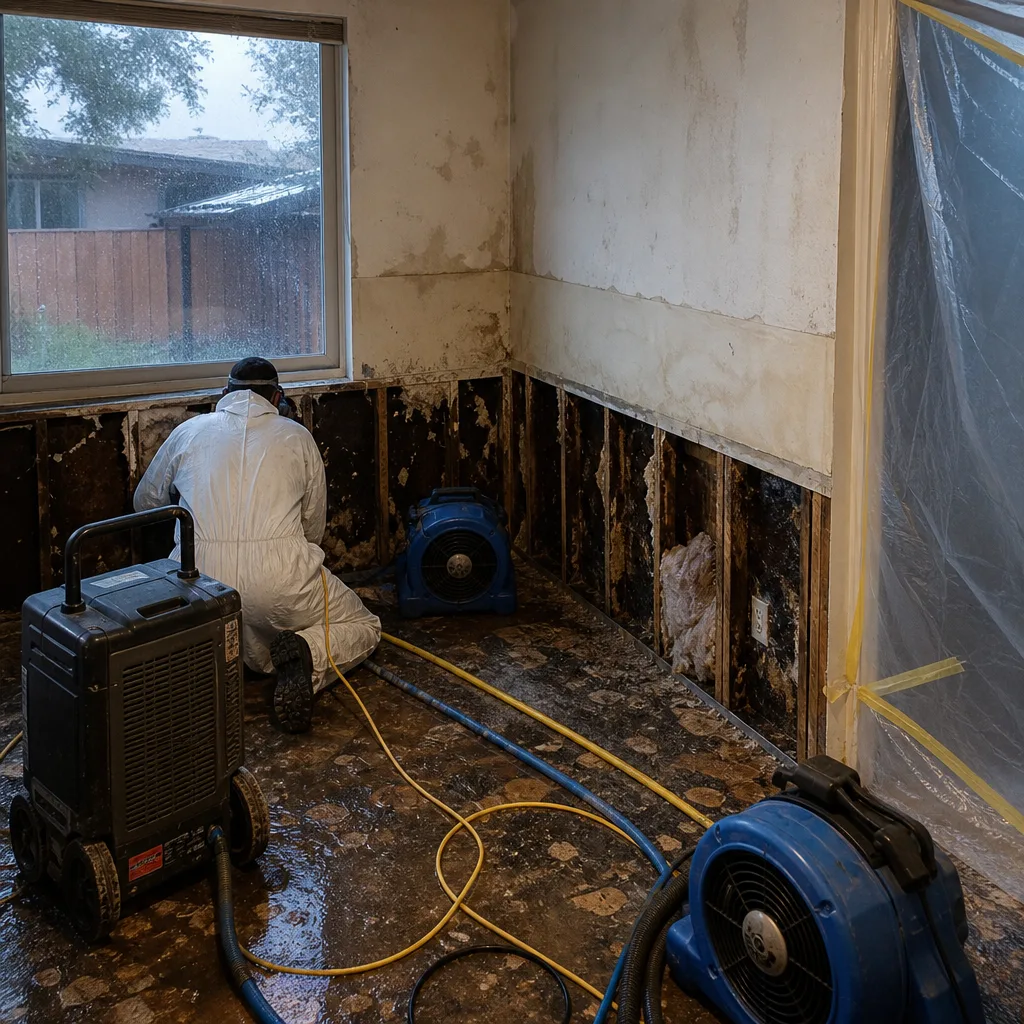 Before
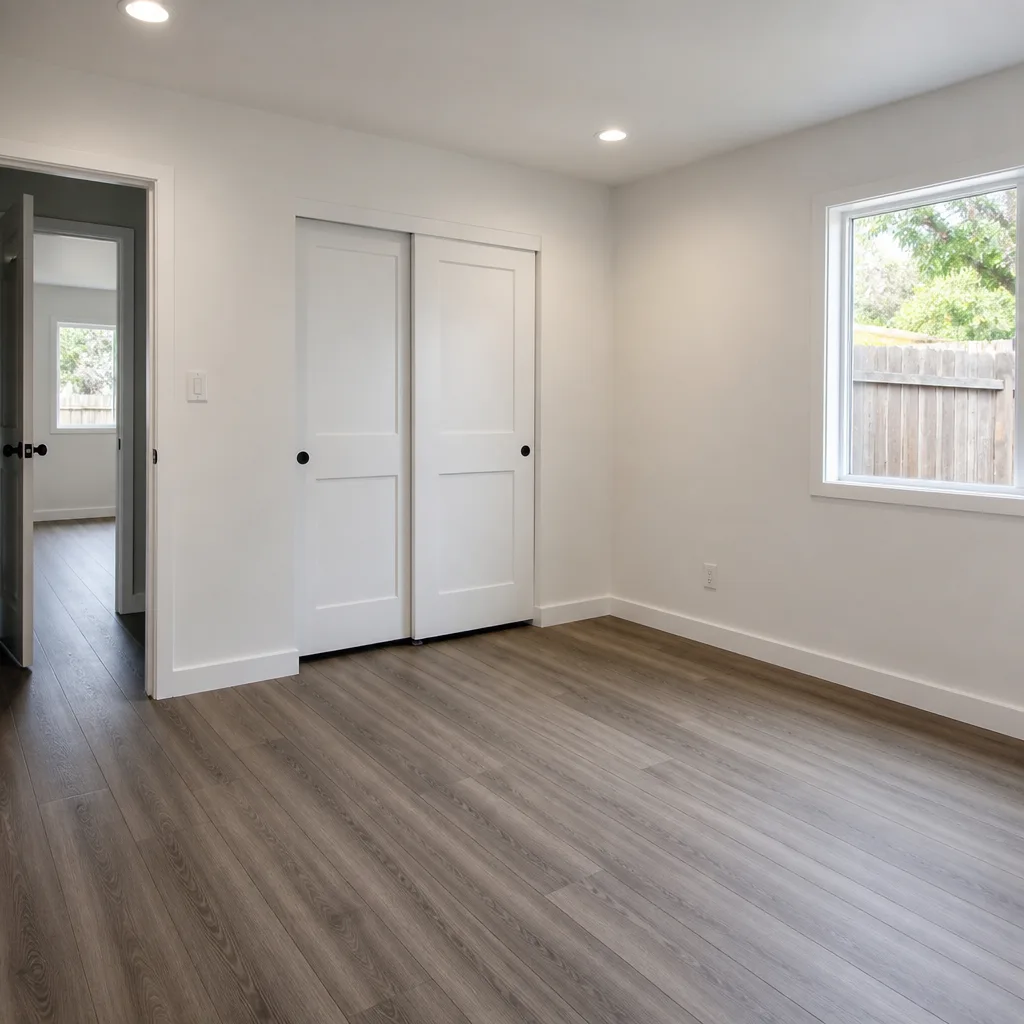 After
After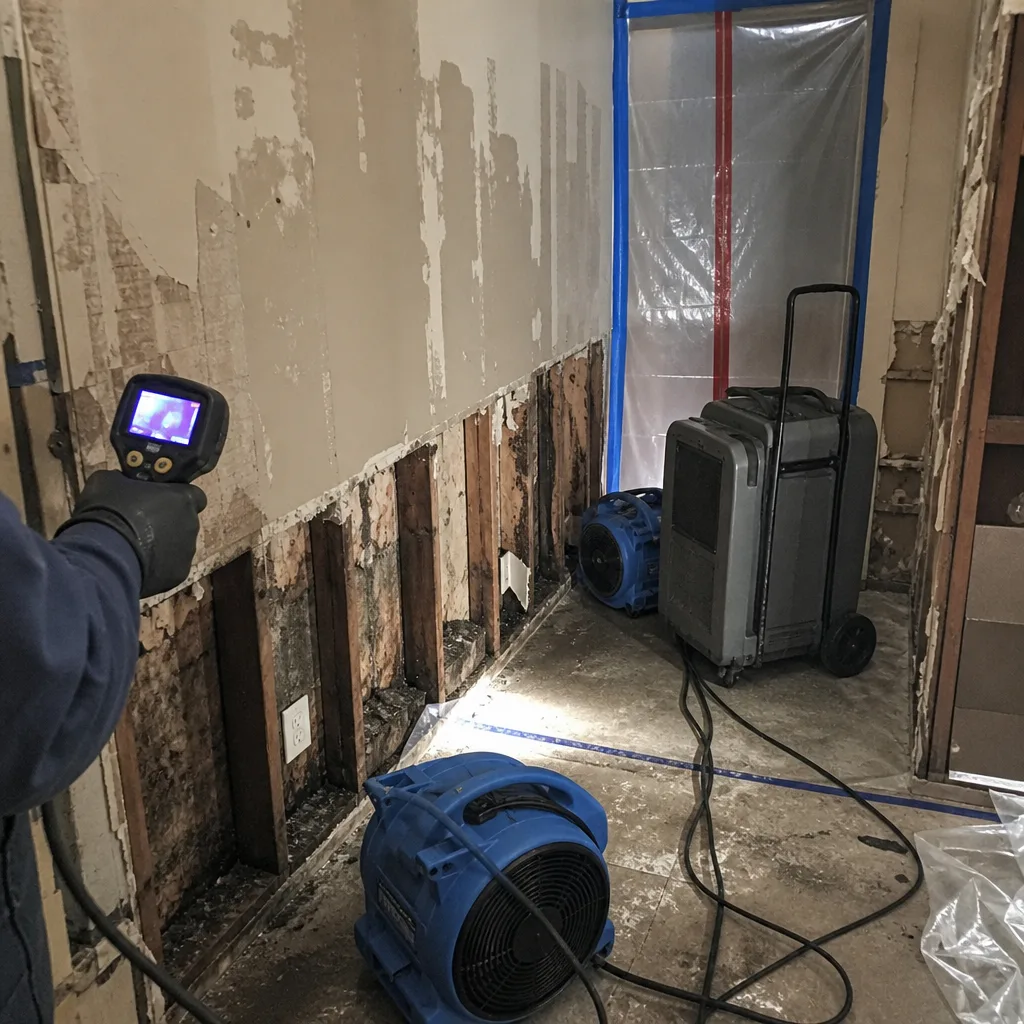 Before
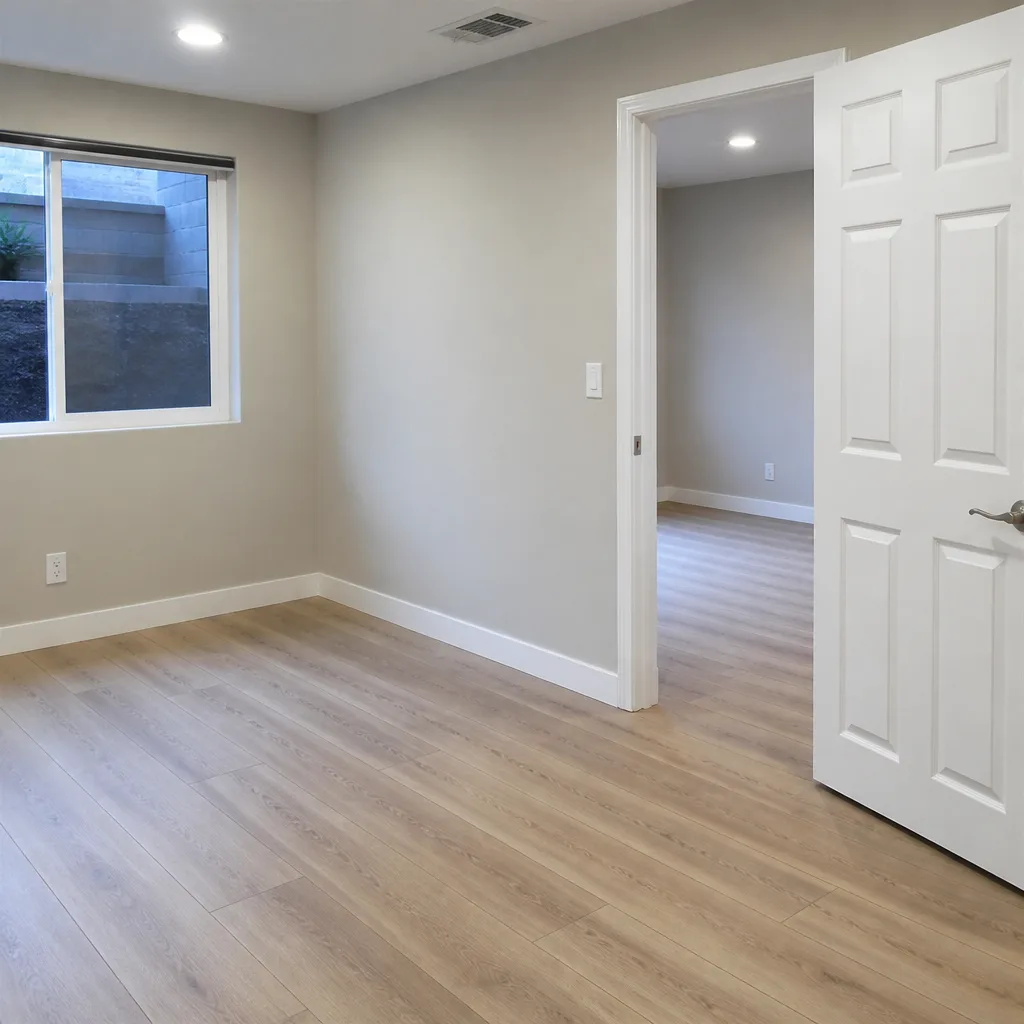 After
After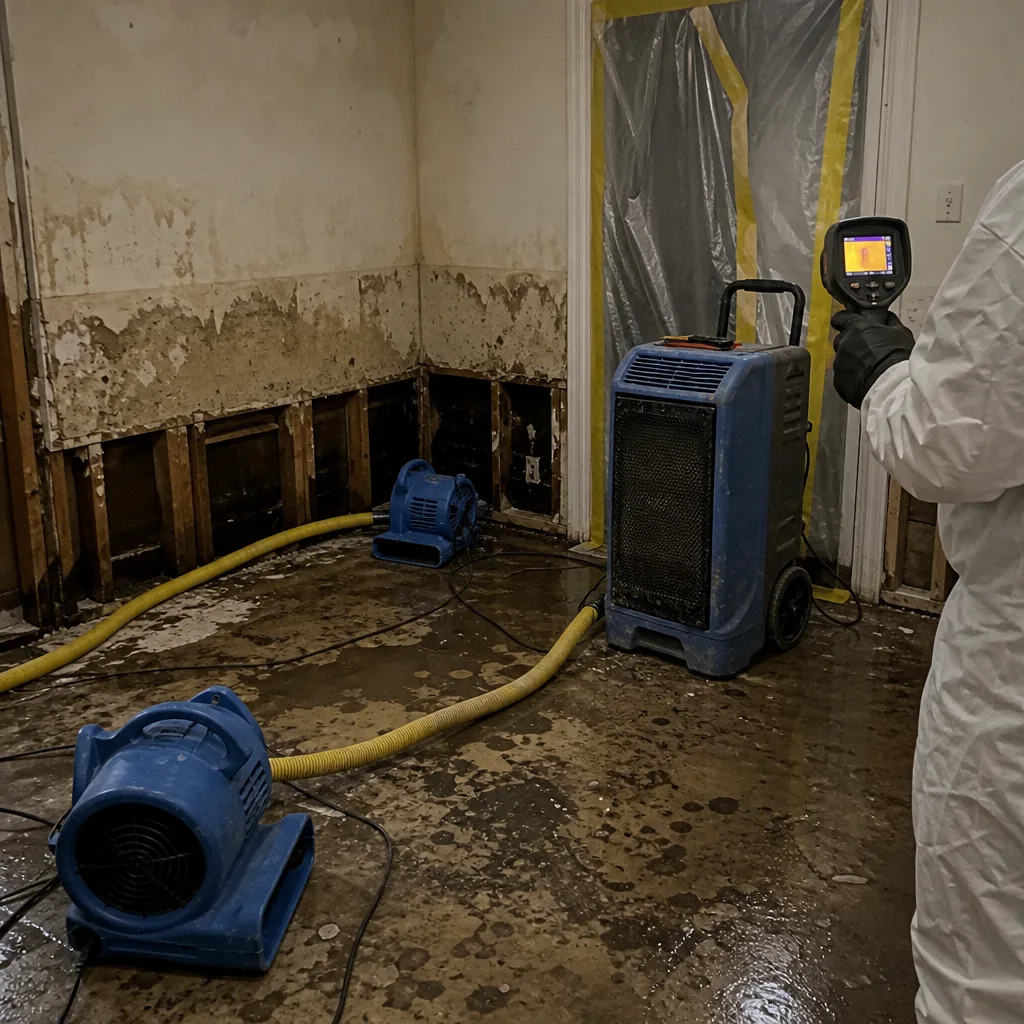 Before
 After
AfterWhen to Call a Professional
Call a professional when water has touched drywall, subfloor, insulation, or any cavity you can’t see into. Call when the water source is any kind of sewage, appliance with food contact, or outdoor floodwater. Call when you see mold larger than a few square feet. Call when smoke from a fire has penetrated beyond the room of origin. And call before you cut into any wall or floor in a pre-1980 home without knowing what’s inside it. Dryden Restoration Orange County home services offers free estimates throughout Orange County – call (424) 552-4739 and we’ll walk you through the scope of what you’re facing, whether you hire us or not.
Frequently Asked Questions
Yes. California law allows homeowners to perform work on their own primary residence without a contractor’s license. But the legal right and the practical reality are different things. Your insurance policy likely requires mitigation performed to reasonable standards, and IICRC S500 is the benchmark adjusters use. DIY work that doesn’t meet that standard can reduce or void coverage on related future claims.
IICRC S500 requires drying affected materials to a moisture content matching the building’s established dry standard, daily monitoring of the drying environment, documentation of starting conditions and daily readings, and removal of materials that cannot be reasonably dried. In practice, this means using professional-grade equipment like Dri-Eaz dehumidifiers and Phoenix air movers, measuring with a moisture meter, and keeping a written log.
A typical Category 1 clean-water loss affecting one room in Orange County runs $2,500-$6,500 including equipment, labor, monitoring, and documentation. Larger losses, Category 2 or 3 water, and projects requiring asbestos abatement can push the total to $8,000-$15,000 or more. Every project is different, and a written scope from a professional gives you the exact number before work starts.
Insurance generally covers professional restoration when the loss is a covered peril and mitigation was initiated promptly. If your DIY attempt was inadequate, the subsequent professional job is still covered, but your claim may be scrutinized more carefully. If the DIY attempt caused secondary damage like mold spread, the insurer may argue the additional damage was preventable and reduce the payout. Documentation is your best defense.
Professional drying for a mid-size water loss typically takes 3-5 days with commercial equipment running continuously and daily monitoring. DIY drying with rental fans and dehumidifiers often takes 7-14 days because the equipment is less powerful and not positioned based on moisture readings. The longer the drying window, the higher the probability of mold growth and secondary damage.
First, get the adjuster’s position in writing. Then contact a professional restoration company to assess the current condition and provide a written scope for the remaining work. A company with insurance-claim experience can document what was done, what remains, and what the current moisture readings show. That documentation becomes the basis for negotiating the additional claim. You can also request a re-inspection from the insurer if the initial evaluation was incomplete.
The Bottom Line
The DIY-versus-professional question isn’t about capability. It’s about consequence. In Orange County, where older homes carry hidden asbestos and lead, where insurance policies have exacting mitigation language, and where the coastal humidity accelerates mold, the consequences of a restoration misstep are concrete and expensive. Rented fans and a shop vac are fine for a puddle on sealed concrete. Everything else deserves a written scope from a professional. The good news: a written scope is exactly what we do. If you’re unsure which side of the line your situation falls on, call us. We’ll help you figure it out. You can also explore more guides & resources on our blog.
Need an experienced Orange County restoration company with written pricing and a 365-day guarantee? Call Dryden Restoration Orange County at (424) 552-4739 for a free estimate. A live person answers, 24 hours a day, 7 days a week.
Written by Carl Brandt, Owner at Dryden Restoration Orange County, serving Orange County since 2005.